What Swimwear Do Gay Men Wear? A Complete Guide to Gay Men’s Swimwear Styles
Gay men’s swimwear is remarkably diverse. Walk around a popular gay beach, attend a resort pool party, board a gay cruise, or spend a weekend at a clothing-optional resort and you may see everything from traditional board shorts to Speedo-style briefs, bikinis, thongs, G-strings, micro swimsuits, and highly experimental gender-fluid designs.
There really is no single thing called a “gay swimsuit.” Sexual orientation does not determine what someone wears. However, gay beach, resort, cruise, and pool-party culture has historically provided more room for men to experiment with body-conscious, revealing, colorful, and unconventional swimwear.
That experimentation has helped create a huge range of choices.
For some men, the perfect swimsuit remains a simple black swim brief. Others want a tiny bikini, a brightly colored thong, a Brazilian-cut suit, or an ultra-minimal micro design. Still others are interested in feminine, gender-neutral, or gender-transforming silhouettes.
This guide explores what swimwear gay men wear, how the major styles differ, and why gay men’s swimwear continues to influence the broader men’s swimwear market.
Gay Men’s Swimwear Has Become Extremely Diverse
For decades, mainstream American men’s swimwear was dominated by trunks and board shorts. Men’s swimsuits were frequently designed around the idea that the body should be relatively concealed.
Gay swimwear culture often went in another direction.
Instead of asking how much a swimsuit could cover, designers and wearers increasingly asked how little material was actually necessary.
That opened the door to:
- Speedo-style swim briefs
- European racing briefs
- Bikini swimsuits
- Brazilian-cut bikinis
- String bikinis
- Thong swimsuits
- G-strings
- Micro briefs
- Micro bikinis
- Ultra-micro swimsuits
- Pouch-focused designs
- Tiny spandex shorts
- Gender-neutral swimwear
- Feminine-cut men’s swimwear
- Gender-minimizing designs
- MTF and transfeminine swimwear
The result is a market in which men can choose swimwear according to their body, personality, destination, comfort level, and desired presentation rather than simply selecting between trunks and board shorts.
1. Speedo-Style Swim Briefs
The classic swim brief remains one of the foundations of gay men’s swimwear.
Although “Speedo” is technically a brand name, the word is commonly used informally to describe close-fitting men’s swim briefs.
A traditional swim brief typically provides full frontal coverage, relatively high-cut legs, and moderate rear coverage.
For someone moving away from trunks for the first time, a swim brief can be an easy introduction to minimal swimwear.
It exposes significantly more leg than conventional trunks while still providing substantial coverage.
Black, navy, red, white, and bright solid colors remain popular, but modern designs also incorporate metallic fabrics, prints, contrasting waistbands, neon shades, and unusual textures.
2. Men’s Bikini Swimwear
The bikini has become an increasingly important part of men’s swimwear.
Compared with a traditional swim brief, a men’s bikini generally has narrower sides and a lower or more sculpted waistline. This exposes more of the hip and upper thigh.
There are numerous variations.
A relatively conservative men’s bikini might have one- or two-inch sides and full rear coverage. A more daring bikini can have extremely narrow sides and considerably less coverage.
This versatility is one reason bikinis work so well for gay swimwear.
A man can choose something only slightly smaller than a traditional swim brief or move all the way toward a micro bikini.
3. Brazilian-Cut Men’s Swimsuits
Brazilian-inspired cuts occupy the territory between conventional briefs and more revealing designs.
The defining characteristic is often the rear.
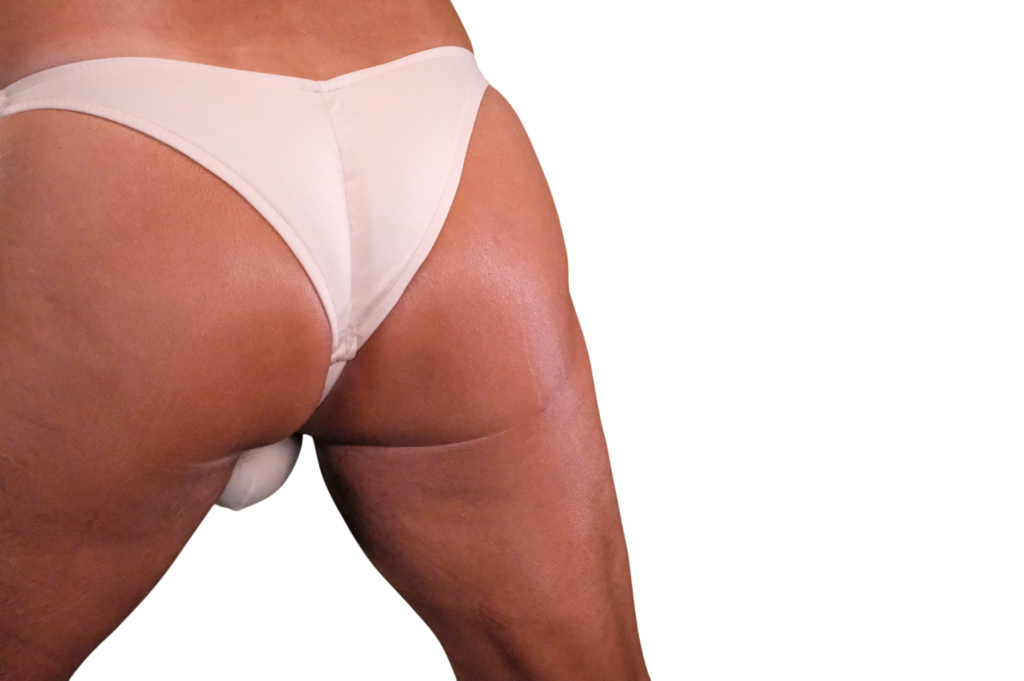
Instead of completely covering the buttocks, the suit uses a narrower rear panel that exposes more cheek.
Brazilian cuts can create a distinctly athletic yet sensual silhouette without becoming a full thong.
They are particularly useful for someone who wants something noticeably more adventurous than a Speedo-style brief but isn’t ready for thong swimwear.
4. Men’s Thong Swimwear
Perhaps no category illustrates the changing boundaries of men’s swimwear better than the thong.
Once considered an extremely niche style for men, thong swimwear has become considerably more visible at gay beaches, resorts, cruises, private pools, and adult-oriented vacation destinations.
A men’s thong generally combines frontal coverage with a narrow rear strap or panel.
Designs range from athletic and relatively understated to extraordinarily minimal.
For many wearers, the appeal is straightforward: maximum sun exposure and minimal fabric.
Thong swimsuits also eliminate much of the traditional distinction between men’s and women’s swimsuit silhouettes.
From behind, certain men’s and women’s thongs can be nearly identical.
That crossover is helping make swimwear increasingly gender-fluid.
5. G-String Swimwear for Men
The G-string takes the minimal philosophy of a thong even further.
Instead of a wider thong back, the swimsuit generally uses a very narrow string or strap.
The sides may also consist almost entirely of strings.
That leaves the pouch or front panel as the primary visible piece of fabric.
G-string swimsuits remain a bold choice and are most commonly associated with adult-oriented beaches, private pools, specialty resorts, cruises, tanning environments, and places where minimal swimwear is accepted.
They also represent an important idea in contemporary men’s swimwear:
A swimsuit doesn’t necessarily need a large amount of material to function as swimwear.
6. Micro Bikinis for Men
Micro swimwear has become one of the more distinctive categories within adventurous gay men’s swimwear.
A micro bikini takes the traditional bikini and reduces its dimensions dramatically.
The sides become narrower.
The rear becomes smaller.
The front becomes more compact.
The entire suit can sometimes consist of surprisingly little fabric.
Micro bikinis can range from genuinely functional minimal swimsuits to novelty or specialty designs intended primarily for tanning, pool parties, private settings, or fashion experimentation.
The attraction is often the combination of simplicity and body exposure.
7. Ultra-Micro Swimwear
Beyond micro swimwear is the ultra-micro category.
There isn’t a universal industry definition separating “micro” from “ultra micro.” Different manufacturers use these terms differently.
Generally, however, ultra-micro describes swimsuits that reduce coverage close to the practical minimum.
This category can include extremely small bikinis, narrow thongs, string designs, and tiny pouch-based swimsuits.
Venue awareness becomes especially important here. A swimsuit that works perfectly at an adults-only resort or private pool may violate dress standards at a family-oriented hotel or municipal swimming facility.
Checking local rules beforehand is always worthwhile.
8. Pouch Swimwear
Men’s anatomy has also become an intentional design element rather than something designers automatically try to disguise.
Modern pouch swimwear can be designed to create very different appearances.
Some pouches emphasize anatomy through shaping and contouring.
Others provide moderate support without emphasizing size.
Compression pouches can create a smaller, smoother appearance.
This means men can choose their swimsuit partly according to the silhouette they want rather than simply their waist measurement.
9. Minimal-Bulge and Smoothing Swimwear
Not every gay man wants a prominently outlined pouch.
An important countertrend is swimwear designed to produce a smoother or less anatomically emphasized front.
Compression fabrics, carefully constructed panels, and specialized cuts can reduce projection and produce a streamlined appearance.
These designs can appeal to men who prefer a sleek silhouette as well as gender-fluid, nonbinary, transfeminine, and other wearers who want less emphasis on traditionally masculine anatomy.
The existence of both enhancement and minimizing styles demonstrates just how broad men’s swimwear has become.
10. Tiny Spandex Swim Shorts
Not every revealing swimsuit needs to be a bikini.
Tiny spandex shorts have developed their own following.
These designs resemble dramatically shortened square-cut trunks. Depending upon the style, the inseam may be extremely short.
The result combines the appearance of men’s shorts with the body-conscious characteristics of a swim brief.
They can be particularly appealing to someone who doesn’t want a bikini or thong but finds conventional swim trunks unnecessarily large.
11. Gender-Neutral Swimwear
Gay men’s swimwear increasingly overlaps with the larger movement toward gender-neutral fashion.
Traditional swimwear divided clothing very clearly:
Men wore trunks or briefs.
Women wore bikinis or one-piece suits.
Contemporary fashion is increasingly challenging those categories.
A swimsuit can simply be a swimsuit.
Narrow bikini sides, cheeky backs, string construction, high-cut legs, bright colors, floral patterns, and other features historically marketed primarily to women are increasingly appearing in men’s collections.
That gives gay men—and men generally—far greater freedom to select silhouettes based on personal style rather than gender labels.
12. Feminine Swimwear for Men
Some men intentionally want a more feminine swimsuit.
That might mean choosing:
- Higher-cut legs
- Narrow bikini straps
- Pastel colors
- Floral prints
- Scrunch-back designs
- Cheeky rear cuts
- String sides
- Smooth-front silhouettes
- Traditionally feminine styling
These swimsuits can be worn by gay men, straight men, bisexual men, femboys, nonbinary people, crossdressers, and transfeminine wearers.
Again, clothing choice doesn’t determine sexual orientation.
The important trend is that designers increasingly recognize that some male-bodied customers want swimsuit styles traditionally associated with women’s fashion.
13. Transfeminine and MTF Swimwear
Another specialized category overlaps with gay and LGBTQ+ swimwear: swimwear intended to create a more feminine front silhouette.
These suits can use compression, shaping, specialized internal construction, or tucking-compatible designs to reduce visible projection.
Some are intended simply to smooth the front. Others aim for a significantly more feminine silhouette.
These designs can be relevant to transgender women and transfeminine people as well as some feminine-presenting men.
Comfort and safety matter particularly with high-compression or tucking-oriented designs. A suit should not cause pain, numbness, skin injury, or circulation problems.
What Do Gay Men Wear at Gay Beaches?
Gay beaches tend to display one of the widest ranges of men’s swimwear.
You may see conventional trunks sitting ten feet away from tiny bikinis and thongs.
Popular choices often include swim briefs, bikinis, Brazilian cuts, thongs, G-strings, and micro swimsuits.
The environment matters enormously.
A beach known for LGBTQ+ tourism and adult-oriented swimwear may have very different informal norms from a family beach.
The best approach is to understand the particular destination rather than assuming every gay beach has identical standards.
What Do Gay Men Wear at Pool Parties?
Pool parties often encourage more experimentation because swimwear becomes part of the event’s fashion.
Bright colors, white swimwear, neon fabrics, prints, metallic materials, thongs, bikinis, and highly fitted briefs can all appear.
Some events even have themes.
For these environments, the swimsuit isn’t merely something worn for swimming. It becomes an outfit.
Gay Cruise Swimwear
Cruises are another place where gay swimwear fashion can become particularly adventurous.
During daytime activities, men may wear ordinary swim briefs, bikinis, or trunks.
Special pool events can produce significantly bolder styles.
A passenger might therefore pack several swimsuits:
A conventional brief for general swimming, a bikini for sunbathing, a thong for an adults-oriented pool event, and something more dramatic for a themed party.
The specific cruise line and event rules should always take priority.
Why Are Gay Men’s Swimsuits Getting Smaller?
Several factors have contributed to the popularity of smaller men’s swimsuits.
More acceptance of men’s bodies
Men increasingly have permission to treat swimwear as fashion rather than merely functional clothing.
Global influences
European, Brazilian, Australian, and other international swimwear traditions have long offered cuts smaller than conventional American board shorts.
Social media
Men are exposed to far more swimsuit styles than previous generations encountered in stores.
LGBTQ+ fashion culture
Gay fashion has historically been willing to challenge conventional ideas about masculinity and clothing.
Better fabrics
Modern stretch fabrics allow extremely small garments to remain supportive and functional.
Gender-fluid fashion
The assumption that bikinis and thongs belong exclusively to women has weakened substantially.
Together, these forces have expanded men’s choices.
Choosing Your First Gay Men’s Swimsuit
If you’re accustomed to board shorts, you don’t have to jump directly into an ultra-micro thong.
Swimwear can be approached progressively.
A common progression might look something like:
Trunks → square-cut shorts → swim briefs → bikinis → Brazilian cuts → thongs → G-strings → micro styles
There is no requirement to progress through those categories, however.
Some men discover that a classic swim brief is their ideal swimsuit and never want anything smaller.
Others put on a bikini or thong for the first time and immediately prefer the freedom of minimal swimwear.
Fit Matters More as Swimwear Gets Smaller
Fit becomes increasingly important as fabric disappears.
With board shorts, an imperfect fit may simply look baggy.
With a micro bikini, poor fit can determine whether the swimsuit remains securely positioned.
Pay attention to:
Waist measurement: Follow the manufacturer’s sizing chart rather than assuming your normal clothing size will transfer directly.
Front coverage: Determine whether you want full coverage, contouring, compression, or a minimal pouch.
Rear coverage: Full, cheeky, Brazilian, thong, and G-string backs create dramatically different fits.
Fabric stretch: High-quality stretch material should recover after being stretched.
Lining: Some suits are fully lined, partially lined, or unlined.
Water behavior: A swimsuit can fit differently when wet.
For extremely small swimwear, testing the suit privately before wearing it publicly is a sensible idea.
Spandex and Lycra Changed Men’s Swimwear
Stretch fabrics are fundamental to modern minimal swimwear.
A well-designed stretch swimsuit can hug complex body contours using remarkably little fabric.
This allows designers to create tiny bikinis, narrow thongs, micro briefs, and other styles that would have been difficult to construct from older swimwear materials.
Stretch also enables different degrees of compression.
One swimsuit can emphasize contours while another minimizes them—all through differences in pattern design, fabric tension, and construction.
Is Gay Swimwear Becoming Mainstream Men’s Swimwear?
In many ways, yes.
Not because all men are suddenly wearing micro thongs, but because the boundaries of acceptable men’s swimwear have expanded.
Men’s bikini briefs are increasingly visible.
Thong swimwear for men has become easier to find.
Shorter trunks are common.
Cheekier cuts exist.
Gender-neutral collections continue developing.
Men are also increasingly comfortable wearing colors and silhouettes that previous generations might have categorized as feminine.
What begins in a niche fashion community can eventually influence mainstream fashion.
Gay swimwear has frequently served that experimental role.
There Is No Required Gay Swimsuit
Perhaps the most important point in a guide about what gay men wear swimming is that gay men don’t have a uniform.
Some love tiny swimwear.
Some hate it.
Some wear Speedos.
Some wear thongs.
Some wear board shorts.
Some prefer gender-neutral fashion.
Some deliberately choose feminine designs.
Others want traditionally masculine athletic swimwear.
The remarkable thing about modern gay men’s swimwear isn’t one particular style.
It is the range of styles available.
The Future of Gay Men’s Swimwear
The next stage of men’s swimwear will probably involve even more crossover between traditional men’s and women’s design.
Expect continued experimentation with smaller cuts, cheekier backs, string construction, unusual pouch shapes, smooth-front designs, gender-neutral silhouettes, and swimwear that allows the wearer to emphasize or minimize traditional gender cues.
At the same time, the classic swim brief isn’t going anywhere.
It remains simple, functional, athletic, and timeless.
The future therefore isn’t about one style replacing another.
It is about choice.
Frequently Asked Questions About Gay Men’s Swimwear
What swimsuit do most gay men wear?
There isn’t a universal style. Swim briefs, bikinis, short trunks, and board shorts are all common, while thongs, G-strings, and micro swimsuits are more prevalent in certain beach, resort, cruise, and pool-party environments.
Do gay men wear Speedos?
Yes. Speedo-style swim briefs have long been popular with many gay men, particularly at beaches, pools, resorts, and vacation destinations.
Do gay men wear bikini swimsuits?
Absolutely. Men’s bikinis range from conservative athletic designs to extremely small micro bikinis.
Do men wear thongs at the beach?
Some do. Acceptance varies considerably by beach, country, resort, and local dress rules, so checking the environment beforehand is advisable.
What is a men’s micro swimsuit?
“Micro swimsuit” is an informal term for swimwear providing substantially less coverage than a conventional swim brief. It can include micro bikinis, tiny pouches, thongs, and G-strings.
Is men’s swimwear becoming more feminine?
Some segments are. High-cut legs, cheeky backs, strings, bright colors, smooth fronts, and other features traditionally associated with women’s swimwear are increasingly available in men’s designs.
Can straight men wear gay swimwear styles?
Of course. A bikini, thong, Speedo, or G-string doesn’t have a sexual orientation. Swimwear styles can be worn by anyone who likes the cut.
What is the best gay swimsuit for a beginner?
A traditional swim brief or moderately cut men’s bikini is often an approachable starting point because it offers the feel and appearance of fitted swimwear without the extreme exposure of a thong or micro design.
Final Thoughts: Gay Men’s Swimwear Is About More Choices
The question “What swimwear do gay men wear?” no longer has a simple answer.
Gay men wear virtually every form of men’s swimwear imaginable—from board shorts and traditional Speedos to bikinis, Brazilian briefs, thongs, G-strings, tiny spandex shorts, micro swimsuits, gender-neutral designs, and transfeminine styles.
What makes contemporary gay swimwear culture interesting is its willingness to experiment.
The traditional boundaries separating masculine and feminine swimwear are becoming less rigid. At the same time, men’s swimsuits are available in more cuts, coverage levels, colors, fabrics, and silhouettes than ever before.
For the wearer, that creates an opportunity to decide what a swimsuit should accomplish.
It can be athletic.
It can be understated.
It can be sexy.
It can be tiny.
It can be masculine, feminine, gender-neutral, or somewhere between those categories.
And ultimately, the best swimsuit is the one that fits the body, the setting, and the person wearing it.